Totale besoekerstal
- Artikels vertoon Trefslae
- 9960250
Besoekers aanlyn
Ons het 87 gaste en geen lede aanlyn
|
|

Teken aan
Media
Wat broei in die stigting? Nuwe onheil??
| |  |
|  | Trefslae: 2024
| | Trefslae: 2024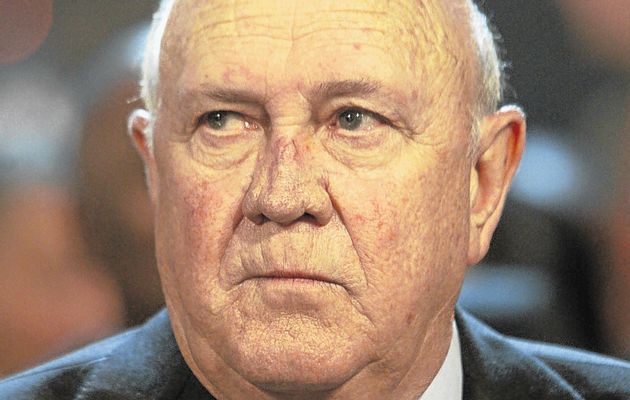 Is De Klerk nie maar soos 'n hond wat naarstig op soek is na 'n deurkomplek in die heining wat hy om hom en die Afrikanervolk gespan het in sy onderhandelinge met, en oorgawe aan die kommunistiese ANC nie.
Die Afrikanervolksparty (AVP) het reeds by twee geleenthede vir FW de Klerk genooi om 'n toespraak voor 'n Afrikanergehoor te maak, byvoorbeeld om die Afrikaners van Ventersdorp toe te spreek. Wat doen De Klerk toe? Hy stuur sy Kanadese hanteerder met die Britse paspoort, Dave Steward van sy stigting, na die gegoede Pretoriase woonbuurt Garsfontein om allerhande donker woorde oor die land en Grondwet 1996 te praat. Die vraag is nou of De Klerk uiteindelik die lig gesien het? Kan Steward se woorde as die woorde van De Klerk aanvaar word? Of is daar ander dinge aan die broei? Bevind Suid-Afrika hom eersdaags midde-in die voortsetting van die Arabiese Lente-rewolusies, aangestig deur die Weste ten behoewe van die bankrot Geldmag?
Om dié vraag wat tyd, fasiliteerder en fasilitering betref, nader te bring: Wat hou AfriForum se Rooi Oktober-veldtog alles in? Dis nie sommer vrae wat politieke willewragtigs stel nie. AfriForum was deel van die Dinokeng-projek waaraan Groot Kapitaal en die sogenaamde burgerlike samelewing allerhande scenario’s vir die tyd tot aanstaande jaar se verkiesing bespreek het. Aan die ander kant: Is De Klerk nie maar soos 'n hond wat naarstig op soek is na 'n deurkomplek in die heining wat hy om hom en die Afrikanervolk gespan het in sy onderhandelinge met, en oorgawe aan die kommunistiese ANC nie. Want daar is mos nie 'n manier hoe hy meer verskonings kan uitdink vir die verskriklike lot wat hy oor die Blankes in ons land gebring het nie.
Stewart het op Garsfontein verklaar dis onmoontlik om die ANC se benadering tot grondwet 1996 te verstaan sonder om kennis te neem “van die onderliggende ideologie, die ANC se sogenaamde Nasionale Demokratiese Rewolusie (NDR). (Wonder of FW vir Steward 'n kopie van daardie NP-Skietgoed wat hy geskryf het toe hy nog lid was van die ou Nasionale Party, daardie Skietgoed waarin De Klerk ronduit spreek oor kommunistiese gevare?) Nog 'n bevinding van Steward is: Die ANC beskou homself as 'n nasionale bevrydingsbeweging met 'n onvoltooide mandaat vir 'n rewolusie en so 'n benadering is onversoenbaar met die grondliggende waardes van die Grondwet”. Hy het ook gepraat oor die ANC se uitgangspunt dat hy die sogenaamde ongeregtighede van die verlede moet regstel, 'n saak wat ook bepalend is wat die ANC se benadering tot die grondwet 1996 betref. Hierdie ANC-benadering moet uiteraard binne die raamwerk van sy rewolusie beskou word. Die “rewolusionêr demokratiese menigtes” moet daarvolgens ook op die voorpunt van die uitoefening van mag wees.
En dan, dalk die groot stelling - sowel as bekentenis - deur De Klerk se segsman met betrekking tot De Klerk en die NP se naïewe benadering tot die destydse onderhandelinge met die ANC:”The NDR also underlies the ANC’s approach to negotiations during the early1990s. Unlike its negotiating partners, the ANC did not view the negotiations between 1990 and 1996 as the means to achieving a final national constitutional accord - but rather as a means to achieving state power and of shifting the balance of forces to its own advantage so that it would be better able to work for the goals of the NDR.”! Hy haal dan vir Pallo Jordan van die ANC in hierdie verband aan: “The ANC admits that it made concessions to its opponents because of the then prevailing balance of forces. In 1999 Pallo Jordan candidly wrote that
'…the elections of April 1994 entailed a degree of compromise, some concessions and postponements, many of which took account of the enemy's real strength and untapped power'.”
Volgens Steward aanvaar die ANC se samesweringsvennote, COSATU en die SA Kommunistiese Party, die NDR op hul beurt net as 'n stadium leidend tot die finale kommunistiese of sosialistiese staat. Oor COSATU se benadering haal hy COSATU-woordvoerder Dlamini aan en verklaar: “COSATU’s true orientation was unambiguously confirmed by its President Dlamini at the 5th Central Committee meeting in June 2011: “We want to make it clear that COSATU may be a federation of unions but it is a federation of a special kind. We are a Marxist-Leninist formation...'”
STEWARD se toespraak tydens 'n konferensie oor die land se toekoms in Garsfontein:
11 SEPTEMBER 2013
THE ANC’S USE -OR ABUSE -OF THE CONSTITUTION
It is impossible to understand the ANC’s approach to the Constitution without first understanding
• its underlying ideology, the National Democratic Revolution;
• its view of its own ongoing role as a National Liberation Movement;
• its approach to the constitutional negotiations; and
• the influence of its alliance partners on its present and future approach.
The ANC claims that it supports the Constitution. According to its Strategy and Tactics documents a "fundamental condition for liberation is democracy and an abiding culture of human rights". "All citizens should be guaranteed the right to elect a government of their choice, freedom of expression, freedom from discrimination, and other rights entrenched in the Constitution. They should have a government not only formally based on their will, but one that is open and transparent, and one that consults and continually involves the people in policy formulation and implementation".
The ANC says that it has "set out to implement both the letter and the spirit of the Constitution, including such principles as multi-party democracy, the doctrine and practice of separation of powers in a constitutional state, fundamental human rights to all citizens, respect for the rights of linguistic, religious and cultural communities, and social equity within the context of correcting the historical injustices of apartheid"…The last-mentioned phrase "within the context of correcting the historical injustices of apartheid" however, constitutes a fundamentally important qualification of the ANC’s
acceptance of the Constitution. It means that it accepts the Constitution within the framework of its own ideology of National Democratic Revolution.
However, in September 2011, deputy minister of Correctional Services Ngoako Ramathlodi expressed the frustration of many black intellectuals with the Constitution. He complained that it had emigrated "substantial power away from the legislature and the executive and vesting it in the judiciary, Chapter 9 institutions and civil society movements". "Apartheid forces sought to and succeeded in retaining white domination under a black government."
The National Democratic Revolution
The National Democratic Revolution (NDR) flows from the ANC’s analysis of South African history and its perception of the need to eliminate the continuing legacy of apartheidcolonialism. As a national liberation movement the ANC regards"the continuing legacy of colonialism and white minority rule" as the "defining reality of our society". "This legacy still impacts upon every aspect of our society. It impacts upon the ways in which black people in general, and Africans in particular, are differently affected by everything, ranging from unemployment, to literacy, to life expectancy levels."
The NDR’s final goal is the elimination of the legacy of apartheid-colonialism and the establishment of a non-racial society in which all centres of power and influence will be broadly representative of the country's demographics. The ANC’s View of Itself as aNational Liberation Movement The ANC believes that it is not just "a leader of itself, nor just of its supporters". "History has bequeathed on it the mission to lead South African society as a whole in the quest for a truly non-racial, non-sexist and democratic nation". It sees itself, not as a political party in the bourgeois sense but "as a broad multi-class, mass organisation, uniting the motive forces on the basis of a programme for transformation". In its view, its revolutionary leadership role gives it a status and legitimacy that transcends those of an ordinary political party - and it is for this reason that it has consistently resisted pressure to transform itself into a normal party.
In ANC also regards itself as a hegemonic organisation. It believes that "the revolutionary democratic masses it led and leads must, at all times and in all fields of human activity, assert and exercise their hegemony as the leader of the process of the fundamental social and national democratic transformation of our country". The ANC’s view of itself as a national liberation movement with an unfulfilled revolutionary mandate is irreconcilable with the founding values of the Constitution, which make provision for a multiparty democracy. Hegemonism is the antithesis of the right to equality.
The Constitutional Negotiations
The NDR also underlies the ANC’s approach to negotiations during the early 1990s. Unlike its negotiating partners, the ANC did not view the negotiations between 1990 and 1996 as the means to achieving a final national constitutional accord - but rather as a means to achieving state power and of shifting the balance of forces to its own advantage so that it would be better able to work for the goals of the NDR. In the process it had to make constitutional compromises that it regarded as temporary
expedients necessitated by the then prevailing balance of forces. Neither - in its opinion -was there any prospect of genuine national reconciliation between blacks and whites while the contradictions of apartheid social and economic relations persisted.The ANC admits that it made concessions to its opponents because of the then prevailing balance of forces. In 1999 Pallo Jordan candidly wrote that
"…the elections of April 1994 entailed a degree of compromise, some concessions and postponements, many of which took account of the enemy's real strength and untapped power".
"Others were made to draw to our side of the conflict vacillating class elements and strata who might otherwise have reinforced the ranks of an as a yet undefeated enemy. Yet others were made to widen the fissures and cracks within the enemy's own ranks and to buy time that would enable us to consolidate the gains made. There were also compromises forced upon us because we could ill-afford to jeopardise the larger prize - majority rule - in pursuance of a few uncertainties." The ANC also admits that it made concessions that it had no intention of honoring: "The example of the Volks chamber serves to highlight a concession that is most glaringly inconsistent with both the democratic foundations of the South African Constitution and the tradition to which the ANC has always adhered."
"There are a number of others, perhaps less jarring, which had to be made at the time as a means of smoothing the transition. It is however of paramount importance that we assess whether these were temporary arrangements which should not be allowed to congeal into a status quo or were regarded as options that could become permanent”. The compromises that the ANC had to accept in the new Constitution included traditional guarantees for the independence of the judiciary, the separation of powers, a quasi-federal system that included provinces with real powers; language and cultural rights, including assurances that the status of no language would be diminished and the right, where practical, to mother-tongue education in single medium schools; and, most notably, entrenched property rights.
However, the ANC continues to view the permanence of these concessions within the framework of the changing balance of power. Last year it announced that the balance of forces had shifted sufficiently to enable it to embark on a radical second phase of the transition that was intended to address the socio-economic legacy of apartheid. Among the 'temporary arrangements of 1996' that the ANC has now decided should not be allowed to congeal into the status quo are property rights, the current provincial system and language rights.
Seizing the Levers of State Power
Although the 1994 transition to democracy resulted in the election of an ANC-dominated government of national unity, in the ANC’s view it had achieved "only elements of power". However, control of government after 1994 "…gave it immense possibilities to use the new situation as a beachhead to fundamentally transform society.” Accordingly, the key strategic task of the NDR after 1994 was the need "to strengthen the hold of the democratic movement (i.e. the ANC) over state power, and to transform the state machinery to serve the cause of social transformation: The levers of state power include the legislatures, the executives, the public service, the security forces, the judiciary, parastatals, the public broadcaster, and so on".
Although the ANC states that "Control by democratic forces means that these institutions should operate on the basis of the precepts of the Constitution" it is clear, once again, that the ANC believes that the Constitution should be interpreted within the framework of the NDR. It adds that these institutions "should be guided by new doctrines; they should reflect in their composition the demographics of the country; and they should owe allegiance to the new order". The ANC’s publicly proclaimed goal of "seizing the levers of state power" - including the public service and the security forces - is, of course, profoundly irreconcilable with the Constitution. The Constitution stipulates in section 196(2) that the Public Service Commission is "independent and impartial". In section 197(3) it requires that "no employee of the public service may be favoured or prejudiced only because that person supports a particular political party or cause".
Section 199(7)states that "neither the security forces, nor any of their members, may, in the performance of their functions a) prejudice a political party interest that is legitimate in terms of the constitution; or b) further, in a partisan manner, any interest of a political party". The idea that "the democratic movement" should control the judiciary is irreconcilable with the separation of powers that the ANC says it supports. Sections 165(2) and (3) of the Constitution stipulate that "The Courts are independent and subject only to the Constitution and the law, which they must apply impartially and without fear, favour and prejudice", and that "no person or organ of state may interfere with the
functioning of the courts". The National Prosecuting Authority, the SABC and parastatals have also been prime targets of the ANC leadership.
Cadre Deployment
Cadre deployment is one of the means the ANC uses to seize the levers of state power. It believes that its members should owe their primary allegiance to the ANC wherever they may be deployed. "In all centres of power, particularly in parliament and the executive, ANC representatives must fulfill the mandate of the organisation. They should account to the ANC and seek its broad guidance." Cadre deployment has been declared illegal by our courts. Section 197(3) of the Constitution states that "No employee of the public service may be favoured or prejudiced only because that person supports a particular political party or cause".
'Transformation'
By 2004, once the ANC had seized most of the important levers of state power, it felt sufficiently confident to begin with the main objective of the NDR - "the elimination of apartheid property relations. This requires:
• the de-racialisation of ownership and control of wealth, including land; and
• equity and affirmative action in the provision of skills and access to positions of management…"
This would be achieved through a comprehensive process of land reform; affirmative action and broad-based black economic empowerment. The goal is demographic representivity at all levels of the public, private and non-governmental sectors. Collectively, these initiatives comprise "transformation" - which the ANC sees as the transcendental value of the Constitution.
And yet the word "transformation" does not appear in the Constitution. The ANC’s transformation policies do not pass constitutional muster for the following reasons:
• they are unconstitutional in as far as they conflict with the foundational value of nonracialism.
• they also conflict with sections 9(3) and 9(5) which prohibit unfair discrimination by the state and proclaim that discrimination is unfair unless it is established that it is fair;
• they have demonstrably failed to promote equality;
• there are other more appropriate measures to promote equality; and because
• these measures are open-ended in terms of their duration and their scope - and as such breach South Africa’s obligations in terms of the International Convention on the Elimination of All Forms of Racial Discrimination (CERD). Language and Cultural Rights Constitutional compromises that the ANC evidently thinks can be dispensed with include the provisions that promote language and cultural rights.
During the past 19 years South Africa has been moving further and further away from the ideal of cultural, religious and language diversity.
• Despite the unambiguous constitutional guarantees for multilingualism South Africa increasingly has only one de facto official language -- which is English;
• The right to education in the language of one’s choice is increasingly under pressure -- particularly at many Afrikaans high schools and former Afrikaans-language universities;• Neither has the government carried out its responsibility in section 6 of the Constitution to develop black indigenous languages. Perhaps the most ominous threat to diversity comes from increasing demands that minorities should conform to the goal of pervasive and all-embracing demographic representivity. The idea is that in a perfectly non-racial society all institutions in the public, private and non-governmental sectors should reflect the ethnic composition of society at all levels.
In a multi-community society like South Africa, 'demographic representivity' would mean that minorities would be subject to the control of the majority in every area of their lives - in their jobs, in their schools, in their universities and in their sports. It would reintroduce a situation in which important aspects of the lives of South African citizens would once again be determined by their race. Where apartheid sought to box people into Bantustans and group areas according to their race, demographic representivity would, in effect, confine South Africans in demographic pens - according to the percentage of the population that they represent.
Demographic representivity breaches the foundational values of human dignity, equality, the advancement of human rights and freedoms and non-racialism as well as the equality
provisions in section 9. Also, the ANC is clearly not carrying out is responsibilities to language and cultural communities in terms of sections 6(1), 6(4), 29(2) and 185. The Tripartite Alliance In considering the ANC’s commitment to the Constitution consideration must also be given to its relationship with the SACP and COSATU within the Tripartite Alliance. The SACP and COSATU support the NDR - but only as a staging post on their line of march toward a fully 'socialist' - or communist -state. At its 9th Congress in 2006, COSATU resolved to address this situation and to recapture control of the NDR. It adopted an official position that rejects the separation of the NDR from socialism and asserts that "the dictatorship of the proletariat is the only guarantee that there will be a transition from NDR to socialism".
COSATU’s true orientation was unambiguously confirmed by its President Dlamini at the 5th Central Committee meeting in June 2011: "We want to make it clear that COSATU may be a federation of unions but it is a federation of a special kind. We are a Marxist-Leninist formation not in words but through our commitment to the struggle for socialism and in that context we encourage our members to fill the front ranks of the SACP and we subject ourselves to the discipline of communists. We accept the SACP as our vanguard towards the struggle for socialism. It is for this reason that we will do anything within our capacity to strengthen the SACP."The Political Report of the SACP’s 11th Congress Central Committee quotes with approval the 1928 Resolution of the Communist International that the Communist Party in South Africa should aim "to transform the African National Congress into a fighting nationalist revolutionary organization against the white bourgeoisie and the British imperialists, based upon the trade unions, peasant organizations, etc., developing systematically the leadership of the workers and the Communist Party in the this organization". The SACP, in July 2007, then draws specific attention to the last point: "we repeat: 'developing systematically the leadership of the workers and the Communist Party in this organization'". Nor should the influence of the Tripartite Alliance be underestimated. At its summit on 1 September it committed itself to "advancing, deepening and defending a radical second phase of our democratic transition" - including reaffirmation of the goals of the Green Paper on Land Reform. It also effectively eviscerated the National Development Plan - which had been endorsed by the ANC at Mangaung - and which presented a rational approach to resolving the economic and social challenges facing South Africa.
Clearly, the ANC’s continuing alliance with organizations committed to the establishment of the dictatorship of the proletariat and a communist state, is irreconcilable with its professed support for the Constitution.
Conclusion
Perhaps the underlying - and most serious - contradiction between the NDR and the Constitution is that it constitutes an ongoing and all-embracing struggle by the government against citizens of South Africa on the basis of their race. In terms of the NDR the great majority of white South Africans are regarded as "antagonists". The continuation of a state sponsored inter-racial struggle after 1994 is irreconcilable with the letter and spirit of the 1993 and 1996 Constitutions and with the goals of reconciliation and national unity. It advocates an adversarial process involving 'antagonistic contradictions' and requiring the resolution of 'the national grievance'. The ANC says that it is quite understandable that 'the forces which benefited from the system of apartheid' should seek 'to express their disappointment or genuine apprehension with the process of change'.
The postamble to the 1993 Constitution presupposes the end of struggle and conflict and to promote "the recognition of human rights, democracy and peaceful coexistence and development opportunities for all South Africans, irrespective of colour, race, class belief or sex". The Preamble to the 1996 Constitution states that one of its key objectives is to "heal the divisions of the past and to build a society based on democratic values, social justice and fundamental human rights". The NDR perpetuates and seeks to deepen these divisions. The ANC’s official ideology -the NDR - is irreconcilable with the core values and provisions of the Constitution; and its allies in the Tripartite Alliance are committed to the destruction of the Constitution and the constitutional democracy that it has established.