Totale besoekerstal
- Artikels vertoon Trefslae
- 9956663
Besoekers aanlyn
Ons het 82 gaste en geen lede aanlyn
|
|


Teken aan
Media
HOE VROTTER DIE APPEL HOE MEER WORD DIE WURMS WAT KOP UITSTEEK!
| |  |
|  | Trefslae: 2926
| | Trefslae: 2926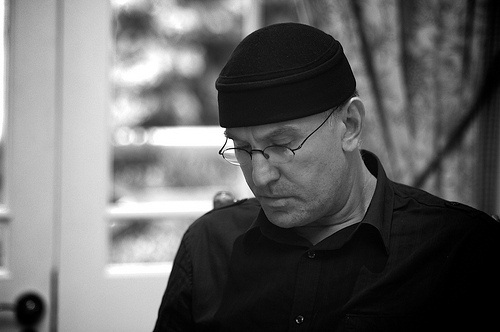 WIE IS MARK BEHR?
In ʼn onlangse aansoek om asiel in Amerika deur ʼn wit Afrikanergesin, sê die bekroonde Suid-Afrikaanse skrywer Mark Behr, wat tans in Amerika woon, “die oorweldigende meerderheid van wit mense in Suid-Afrika is steeds bevoorreg. Dit sal dus “moreel onverdedigbaar” wees om wit Suid-Afrikaners op grond van rassediskriminasie in hul tuisland, asiel in Amerika te gee”. Verdere opmerkings van Behr soos wat dit op die internet verskyn is:
Lately Professor Mark Behr, of Rhodes College, in Memphis, Tennessee, has rejected requests that any help to support South Africans suffering from serious Human Rights violations. “I am not interested in assisting people claiming discrimination in a non-racial, democratic, post-apartheid South Africa.” “In my scholarly opinion, there is absolutely no basis for their allegation – whatever evidence they may present.“ Behr – who is an award-winning South African author – said he did not believe claims of violence on farmers. “If the people are in any way victims of racism, it is, sadly, only a racism of their own making, in their own minds. “Let me add, too, that I speak as a white Afrikaner, from a family of farmers, people who themselves lost farms they owned in Africa, and with my own profound empathy for all people who live off the land in South Africa,” replied Behr.
Professor Behr is a well respected and acknowledged international author and experienced double agent that left South Africa for a safer lifestyle in the USA.
Met sulke uitlatings van ʼn “Afrikaner” ten opsigte van werklike Afrikaners, is dit nodig dat Behr van naderby bekyk word!
Met erkenning aan SAPA het ons die volgende uittreksels verkry uit ʼn artikel van hulle wat in JOHANNESBURG July 30 1996 — Sapa, verskyn het.
PROOF THAT TRUTH HURTS - ONCE A HERO, NOW VILIFIED AS A TRAITOR
Until admitting he once spied for the apartheid machine, Mark Behr was something of a hero. Now the award-winning novelist is being vilified as a traitor.
The government has urged South Africans like Behr to tell their stories, saying the country cannot move forward until its people fully understand what went wrong in the past.
But the overwhelming criticism that has greeted Behr's confession raises questions about how much truth his country can stand.
"I've become a symbol of everything that was ever wrong in South Africa - of betrayal, of false beliefs, of complete and utter culpability," Behr said in a recent telephone interview from Oslo, Norway, where, every summer for the past five years, he has taught a university graduate course on peacemaking.
Behr appeared at a writers' seminar in Cape Town in early July to reveal that while he was leading protests against white minority rule as a university student, he was reporting on his comrades to the police.
Behr, product of a conservative, white, middle class family, said he was willing to believe that "apartheid was okay" as a 22-year-old in 1986. That was the year a relative who was a high ranking police officer first asked him to report on the activities of the few leftist students at the University of Stellenbosch. The money the white government offered helped pay tuition.
Within a year, he said, the young people he was spying on had convinced him their cause was just. But he continued working for the police, not so much for the money, he says, but because he was afraid of being exposed as a traitor. His handlers also threatened to reveal that he was homosexual, something Behr no longer hides but which was very much a shameful secret in 1980s South Africa.
By 1990, the government had embarked on negotiations that led to historic all-race relations in 1994, and its security forces lost interest in Behr.
His confession has been far from welcomed as a contribution to national healing. Behr has been accused of seeking publicity, of being insincere and manipulative, of providing too few details - even of being too remorseful.
"He apologises for the betrayals, for his motivation, for his lack of moral courage; he apologises for apologising; and then, in an infinite regress, he apologises for apologising for apologising," Nic Borain, who worked with Behr as a student activist, wrote in the Weekly Mail and Guardian days after Behr's speech.
Pearlie Joubert, who protested alongside Behr as a student, said she can at least understand white rightists who acted out of conviction, no matter how terrible their crimes. Behr's personal betrayal, and his acknowledgment that he continued spying even after he began to realise that apartheid was wrong, seems to hurt the most.
Jane Taylor, who organised the Cape Town writers' conference at which Behr made his confession, said his very ordinariness may be part of why South Africans are finding it difficult to forgive. Many would like to believe apartheid was a crime committed by the few, not a way of life for most whites.
Taylor said she had no warning Behr planned such a startling confession at her conference. He was invited because even before telling his spy tale, he had made something of a career of admitting to, and apologising for, having once supported apartheid. "The Smell of Apples", his 1995 novel, was lauded as a revealing, pseudo-autobiographical account of the twisted logic of racism.
At the University of Oslo, Behr said he opens each of his summer courses by presenting himself as an example of how an ordinary person can slip down the path of evil.
For the first time this summer, he also told his students of his spying. The class includes Israelis, Palestinians, Bosnians - all with their own horrors and private guilt, and all, Behr said, intrigued by his forthrightedness.
After Norway, Behr will go to the United States to study literature at Notre Dame. He was unsure when he would return to South Africa, sounding saddened and frightened at the storm he's caused back home.
He was eager to know if anyone has spoken out in support, if the anger was dying down, if his countrymen were ready to talk.
"I say in my speech that this is the beginning of my process of going public," he said. "From here, as I say in my speech, the interrogation must begin."
OOK OP DIE INTERNET HET DIE VOLGENDE INLIGTING OOR BEHR VERSKYN:
Mark Behr (born October 19, 1963) is a Tanzanian writer in South Africa. He is currently professor of Creative Writing at Rhodes College, Memphis, TN. He has been professor of World Literature and Fiction Writing at the College of Santa Fe in Santa Fe, New Mexico. He also teaches in the MA program at the University of Cape Town and the MFA program at the University of New Mexico.
Early life: Behr was born into a family of farmers in the district of Oljorro, Arusha, Tanzania, then still Tanganyika. After the nationalization of white-owned farms during the implementation of President Julius Nyerere's Ujamaa Policy of African Socialism in 1964, the family immigrated to South Africa. Here the family defined themselves as Afrikaners, with the Behr children attending Afrikaans language schools and the conservative Dutch Reformed church.
Behr's father became a game ranger in the game parks of KwaZulu-Natal, where Behr spent his early youth. Between ages ten and twelve Behr attended the Drakensberg Boys’ Choir School, a private music academy in the Drakensberg Mountains of KwaZulu-Natal. After matriculation from Port Natal High School, an Afrikaans language school in Durban, he was, like most other young white South African men of his age, conscripted into the South African Defense Force, and he served in the Angolan War, becoming a junior officer in the Marine Corps.
Novels:
Mark Behr's three novels are: The Smell of Apples[1], Embrace, Kings of the Water.
He has published novels, short stories and essays. His work is often concerned with issues of violence, racism, nationalism, militarization, masculinity and colonialism. Behr's work is extensively translated and has received awards from the Los Angeles Times, the British Society of Authors and the Academy of Science of South Africa. He travels regularly between the USA and South Africa.
Academic Study and Political Development: After leaving the South African Defence Force, Behr attended Stellenbosch University in the Western-Cape Province of South Africa. It was during this period (1985–1989) that Behr's creative work was first published several poems appeared in the university's annual magazine, "Die Stellenbosse Student". While a student there, Behr became an agent for the South African apartheid government, which was committed to monitoring the activities of students on university campuses in order to prevent political insurrection.
Undergoing a process of political radicalization himself, he later turned double agent and spied on the South African government on behalf of the African National Congress, one of the major anti-apartheid organizations (and, since the 1994 elections, the governing party of the new multiracial democracy). Having graduated with a Bachelor of Arts degree with majors in English and Politics. Behr proceeded to read for an Honors degree in Politics. After a year with IDASA (the Institute for a Democratic Alternative for South Africa) Behr became a Research Fellow and lecturer at the International Peace Research Institute in Oslo, Norway, and began to travel between Europe, South Africa, and the United States. He enrolled at the University of Notre Dame in the United States where he studied with Joseph Buttigieg, the translator of Antonio Gramsci’s Prison Notebooks. Behr graduated from Notre Dame with Master’s degrees in International Peace Studies in 1993, Fiction Writing in 1998, and English Literature in 2000.
Vanuit ʼn liberale en Afrikanervyandige oogpunt mag Behr dalk “gesaghebbend” beskou word om Afrikaners en Suid Afrika se omstandigheid te be-oordeel. Wat die AVP betref is hy egter heeltemal onbevoeg en is sy oordeel só besoedel dat enige instansie wat sy uitlatings ernstig opneem ten spyte van sy agtergrond, beskou behoort te word as vyande van die Afrikaner.